

Oak galls. Photo by Uhanu. Licensed under the
CC BY-SA 3.0 license.
Iron gall ink was used for most of the Current Era, from the first century to the late 20th. The ink’s name comes from its ingredients. It was made by iron sulfate mixed with tannic acid, which was extracted from plant galls – wart-like outgrowths caused by insects and mites.
Did you know? Tannic acid is a type of tannin, bitter compounds found in coffee, tea, and chocolate.
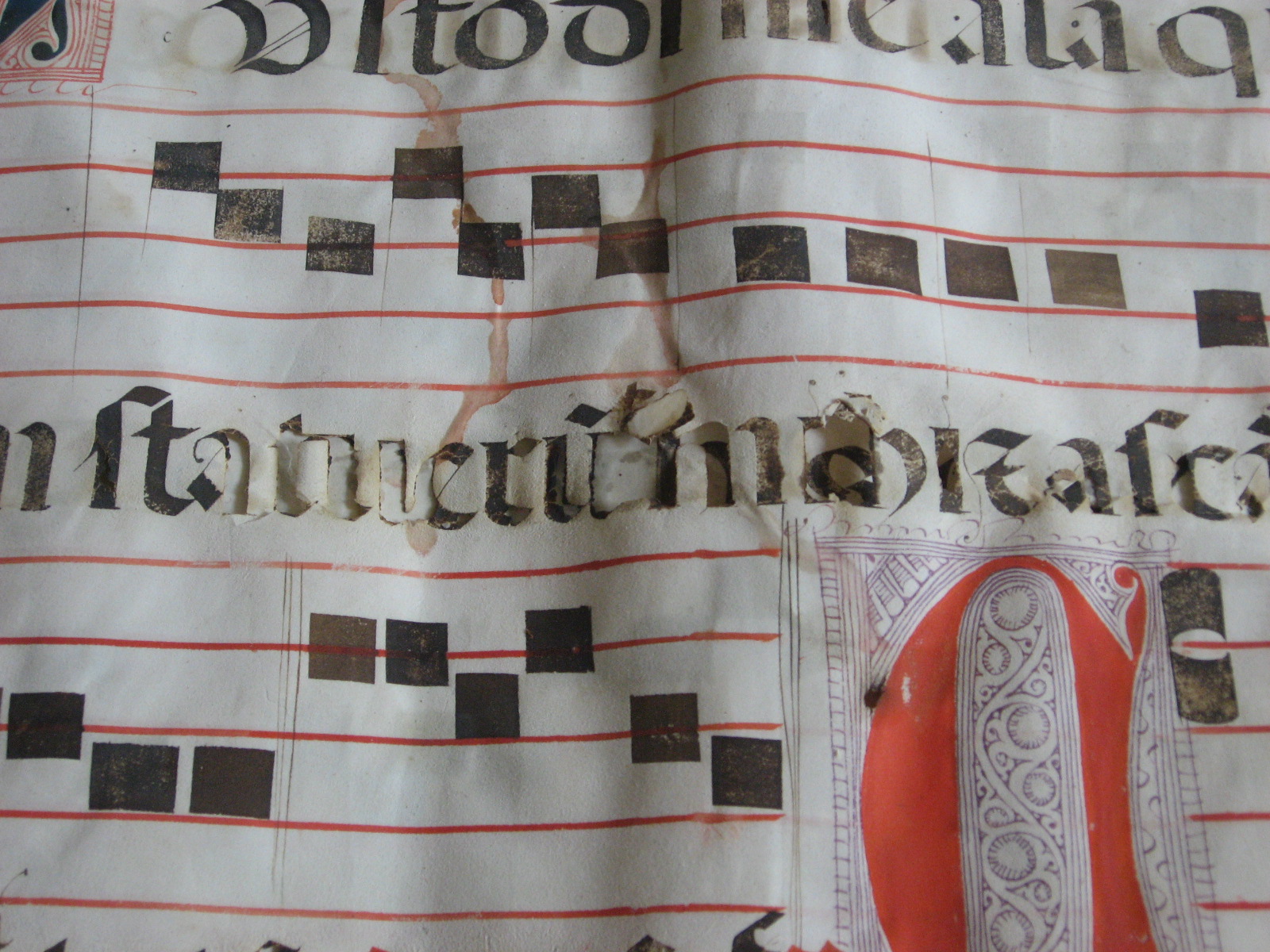
Iron gall ink eating through paper. Public domain image.
Iron gall ink was popular because, unlike other inks, it could not be erased from parchment by washing. However, due to the ink’s acidity, it will inevitably be erased by time: iron gall ink slowly eats through parchment and paper, eventually destroying the document it was used to write.
Because the deterioration cannot be stopped, preservation is focused on holding the document together so it remains legible as the ink destroys it.
Most of the documents in the Hook Papers contain writing in iron gall ink, including all three exhibit pieces.
 Colonel Hook Papers